Louisiana political campaigns and outside groups must now disclose when they use artificial intelligence to create realistic but fabricated depictions of candidates.
The requirement took effect Aug. 1 under Act 806, a state law designed to help voters identify political messages that use AI to alter a candidate’s image, likeness or voice.
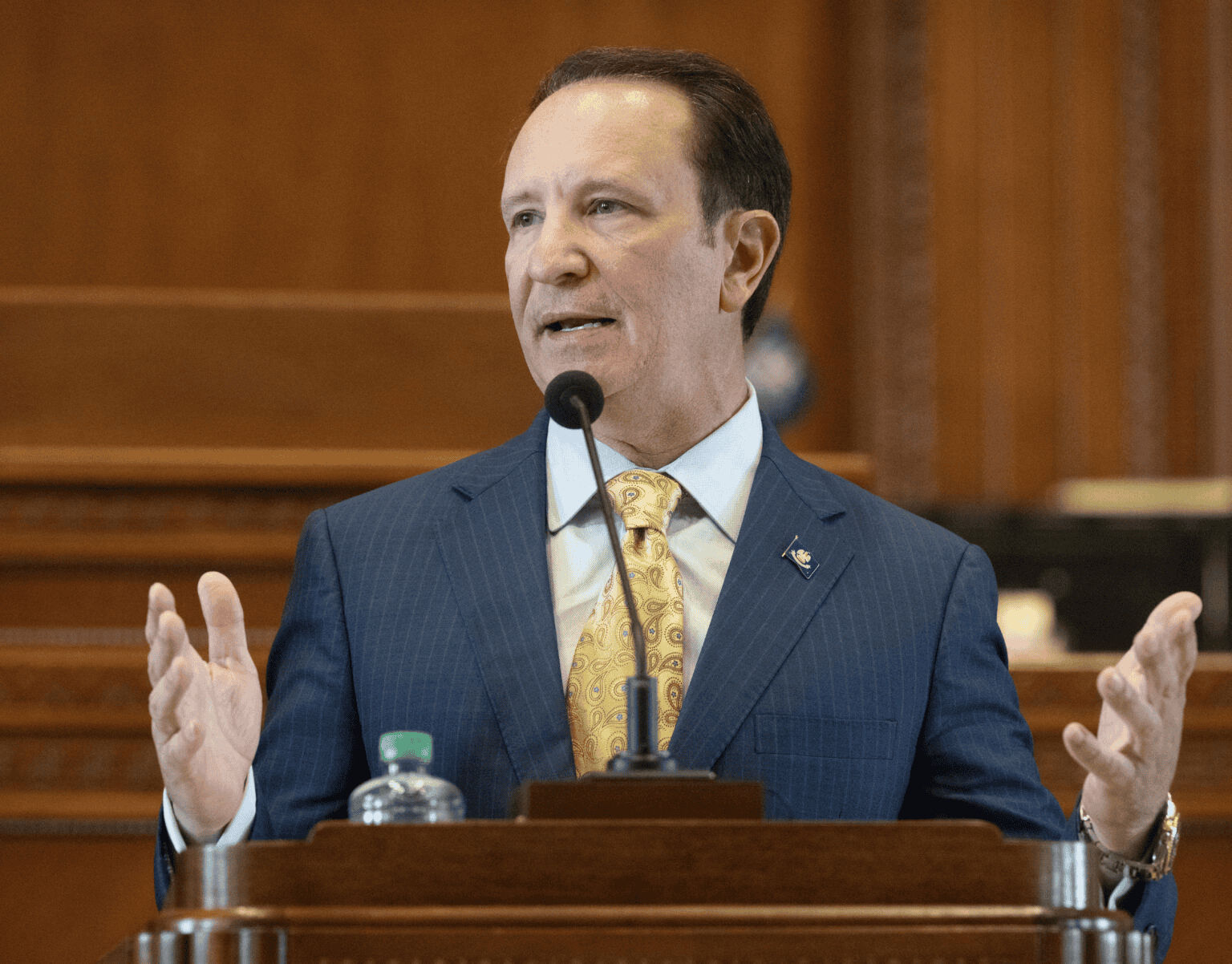
Gov. Jeff Landry signed House Bill 459 on June 9 after it passed the state Legislature this spring. The measure was sponsored by state Rep. Mandie Landry, a New Orleans Democrat, with state Rep. Jessica Domangue, a Republican from Houma, who was a co-author. The bill’s history and final text are available through the Louisiana Legislature. The law went into effect Aug. 1.
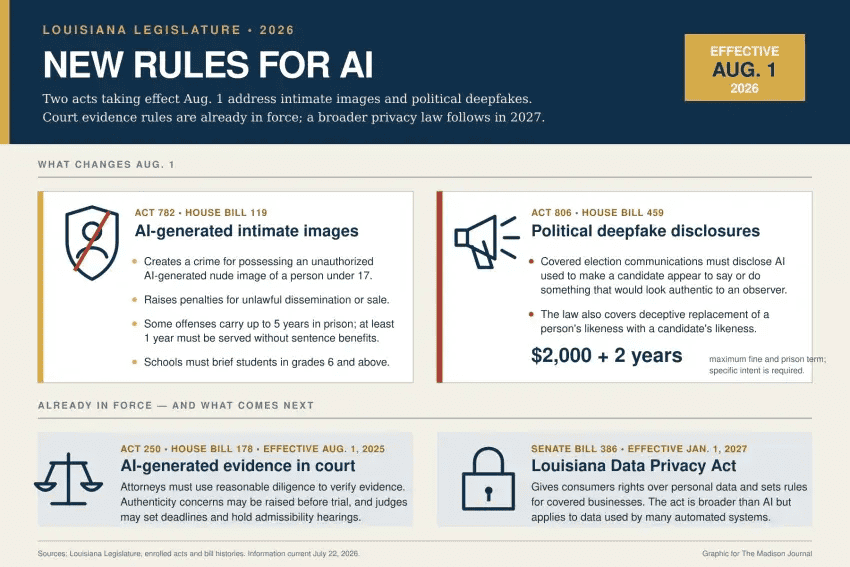
The law applies to election-related communications that portray a candidate or an elected official facing a recall. If AI is used to create, alter or digitally manipulate the person’s appearance or voice in a way that could look like an authentic record of actual speech or conduct, the communication must include a clear disclosure explaining that it was created using artificial intelligence. The requirement is aimed at deepfakes, which use artificial intelligence to make a person appear to say or do something that never happened. Read more on deep fakes under resources.
The law does not prohibit campaigns from using AI-generated political material. It requires them to label certain synthetic depictions so voters are not led to believe they are authentic photographs, recordings or videos.
That distinction reflects an attempt to address deceptive campaign tactics without banning political expression. Rep. Landry told the Louisiana Radio Network that lawmakers had to balance free speech protections with the need to hold people accountable when artificial intelligence is used to damage someone’s reputation.
Louisiana is part of a broader national movement to regulate that technology in elections. As of June 2026, 31 states had enacted laws governing deepfakes in political messaging, according to the National Conference of State Legislatures.
Most of those states require disclosures rather than banning the material outright. A smaller number prohibit certain deceptive political deepfakes during specified periods before an election. Disclosure requirements offer voters information, but they do not guarantee that viewers will reject a fabricated message.
A disclosure can also become separated from the content. A political video may originally appear with a clear label but later be downloaded, edited or reposted by another account. A cropped version can circulate without the warning attached to the original advertisement.
A political advertisement in Louisiana can still criticize a candidate, exaggerate a position or use satire. The disclosure requirement becomes relevant when artificial intelligence creates an apparently realistic record of a candidate’s words or behavior.
The law requires the disclosure to be clear and understandable. It applies to electioneering communications, a category that includes material expressly supporting or opposing a candidate as well as communications whose context indicates that they are intended to influence a vote.
Act 806 defines electioneering communications to include printed, digital or broadcast material that advocates for or against a candidate, recall effort or ballot proposition. The definition also considers the timing of the communication, its intended audience and whether it is part of a broader issue campaign.
A violation can carry significant consequences. A person who fails to include the required disclosure with the intent to harm a candidate’s reputation or deceive voters may be fined up to $2,000, imprisoned for as long as two years or receive both penalties.
The intent requirement is important. The law does not state that every mistaken omission automatically carries the maximum punishment. Prosecutors would have to establish that the person acted with the purpose of injuring a candidate’s reputation or misleading voters.
Act 806 also includes an exemption for media organizations that broadcast or publish paid political material without having input into or control over its creation. The law’s definition of a media entity includes television and radio stations, newspapers, periodicals, cable providers, streaming services, advertising agencies and certain online platforms.
That provision places responsibility on the people or organizations creating and distributing the political message rather than automatically punishing a news organization or broadcaster for carrying an advertisement it did not produce.
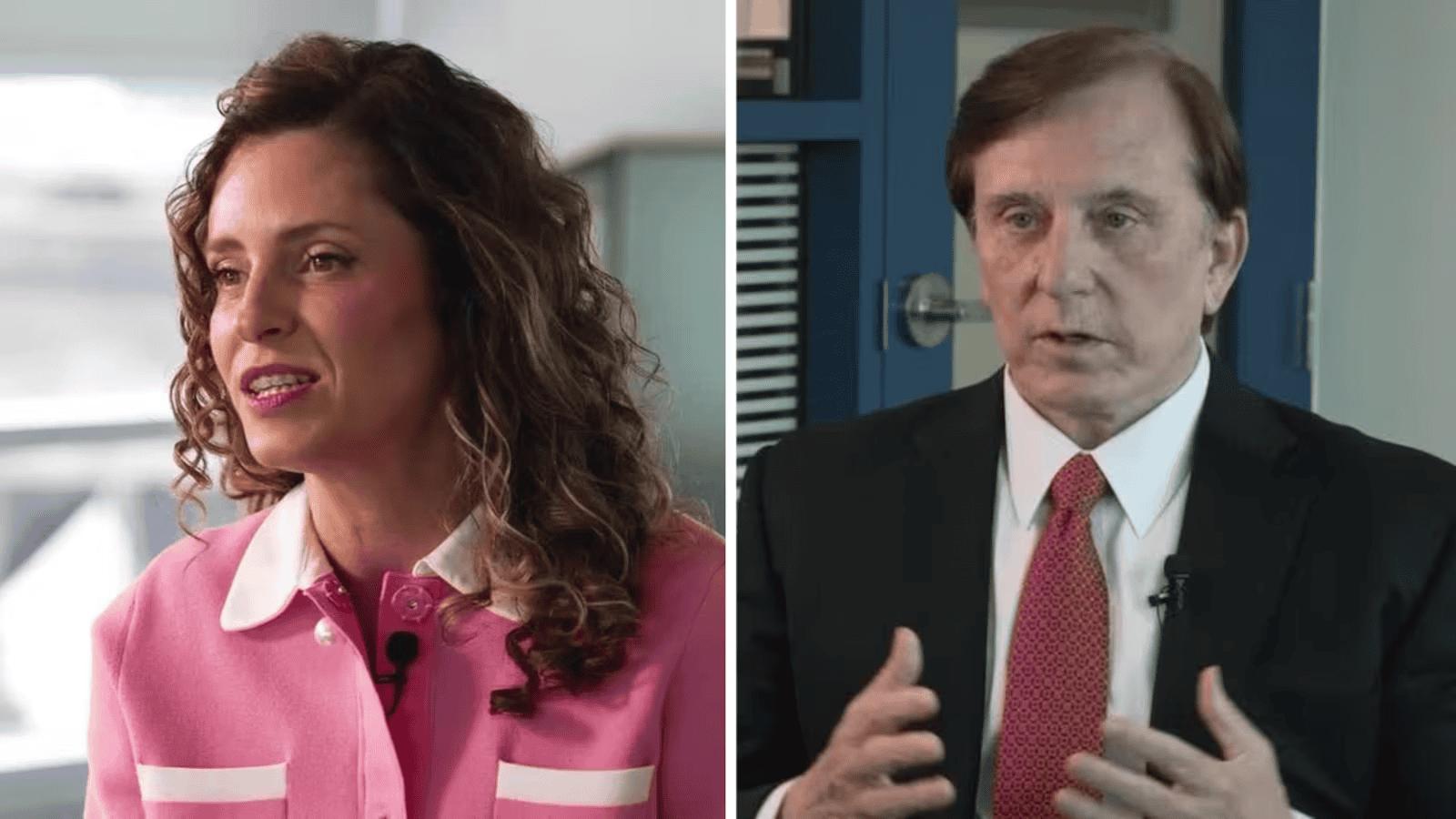
The law arrived shortly after AI-generated videos became an issue in Louisiana’s Republican U.S. Senate primary. Deepfakes depicted U.S. Rep. Julia Letlow and state Treasurer John Fleming during their campaign for the party’s nomination.
One fabricated video made Letlow appear to discuss her late husband and falsely say she had been appointed to his congressional seat when she was elected. Another depicted Fleming driving a bus associated with immigrants entering Louisiana communities.
The videos circulated before Act 806 took effect, so the new disclosure requirement did not apply to them. Their appearance during a prominent statewide campaign nevertheless demonstrated how synthetic media could be used to place Louisiana candidates in fake scenes.
The law also focuses on AI-generated representations of candidates. It does not eliminate misleading political statements, selectively edited authentic footage or false claims presented without a synthetic image or voice.
Those limitations mean enforcement and media literacy will remain important. Voters may still need to identify the original source of a video, find the full recording and compare its claims with independent reporting.
Rep.Landry has indicated that Louisiana lawmakers could revisit the issue as artificial intelligence develops. She told the Louisiana Radio Network that some legislators may seek stronger provisions in a future session because several of the Senate campaign videos appeared after lawmakers had already considered much of the bill.
Act 806 establishes Louisiana’s first statewide disclosure requirement for this category of AI-generated campaign content. It does not prevent political deepfakes from being created or circulated. Instead, it makes concealing their artificial origin a potential crime when the material is intended to deceive voters or harm a candidate.
Sources
Louisiana House of Representatives. Rep. Jessica Domangue’s official profile.
Louisiana House of Representatives. Rep. Mandie Landry’s official profile.
Louisiana Legislature. House Bill 459: Bill history, sponsors and legislative actions.
Louisiana Legislature. Act 806: Final text.
Louisiana Radio Network. Report featuring Rep. Mandie Landry’s comments on AI-generated political content, March 5, 2026.
Louisiana Radio Network. Report on Louisiana’s AI disclosure requirement for political advertising, July 13, 2026.
National Conference of State Legislatures. “Artificial Intelligence (AI) in Elections and Campaigns.”
National Conference of State Legislatures. “Electioneering Communications Disclosure Requirements.”